Portuguese is the official language of Angola and Mozambique, yet for most people in both countries it sits beside one or more local languages. Organizations that want to reach communities there need more than a translation from English. They need content that fits local usage, reading levels and daily life.
Portuguese is not one single standard
The Portuguese of Angola and Mozambique has its own vocabulary and expressions, shaped by contact with Bantu languages. It also differs from Brazilian and European usage. Texts written for Lisbon or São Paulo may sound distant to local readers and may include words that are rare or unfamiliar.
Ask a local reviewer to read the text before you publish it. A short check often prevents awkward or confusing wording.
Portuguese and local languages
Many people speak Umbundu, Kimbundu, Kikongo, Makhuwa, Sena or other languages at home and use Portuguese in school, government and media. Reading levels vary widely. For health or safety messages, plain language, short sentences and familiar words make a big difference.
When a message must reach people who read Portuguese only as a second language, consider adding audio, images or a local-language version.
Plain language matters
Avoid long sentences, legal jargon and abstract nouns. Use verbs, examples and concrete images. A leaflet about hand washing should name the steps in order, not discuss "hygiene practices". Test the text with a few readers from the target community and note where they hesitate.
Health and public information
Health messaging is one of the most common reasons for translation. Terms for diseases, symptoms and treatments must be accurate and easy to understand. Use the names that local clinics and health workers use, and give dosage and timing information in clear steps.
Mistakes in this area can be dangerous. Always have a health professional from the region review the final text.
Numbers, dates and formats
Both countries use the metric system and write dates in day-month-year order. Decimals use a comma, and amounts are given in the local currencies, the kwanza in Angola and the metical in Mozambique. Avoid converting amounts unless necessary, and always state the currency.
Names and places
Spell personal and place names exactly as they appear in official documents. Place names may have older colonial forms and current local forms, so check which one the audience uses. Consistency helps readers recognize places and people at once.
Working with specialists
Choose a provider with native Portuguese speakers who understand the African context. A team offering Portuguese translation services can match translators to the country, apply a glossary and add a review step to check tone and clarity.
Share the audience, the channel and the goal of the message. Context improves every sentence.
Official documents
Communities often need documents translated for school, work or travel, such as diplomas and academic records. Our article on diploma and transcript translation explains how these records are handled and what receiving offices expect.
Regional cooperation and language policy
The Community of Portuguese-Language Countries promotes cooperation and shared language policy among its members, including Angola and Mozambique. Its website, cplp.org, is a useful reference for institutional contacts, language initiatives and background on the Portuguese-speaking world.
Channels and formats
Much of that mobile content now reaches people through apps and games rather than plain text messages. Their interface strings carry placeholders for names, numbers and dates, and plural forms change from one language to another, so a careless transfer can break a sentence or even the app itself. Studios that publish in several languages therefore rely on professional translation services that handle those technical details as carefully as the words. Getting them right keeps digital content as clear as a well-tested radio script.
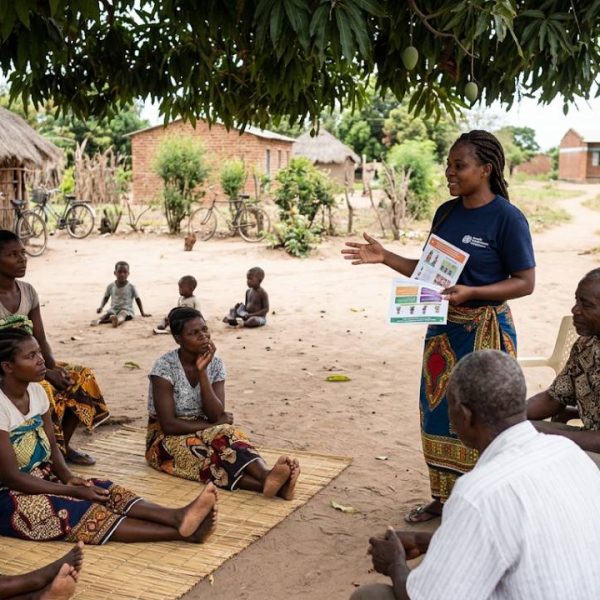
Radio, mobile messages and community meetings often reach more people than websites in these countries. Adapt the format as well as the language: short audio scripts, text messages under a few hundred characters and posters with simple pictures work well. Check that scripts can be read aloud naturally.
Testing the message
Before a campaign, read the text to a small group from the audience. Ask them to repeat the main point in their own words. If they cannot, simplify. A small test saves money and avoids spreading mistaken information.
Respect and cultural sensitivity
Avoid images and examples that rely on outside assumptions. Show local settings, clothing and families, and avoid stereotypes. Work with community leaders and local partners when possible, because trusted voices help messages travel.
Training field staff and partners
Field workers, teachers and volunteers often act as the human voice of a campaign. Give them a short guide that explains key terms in simple Portuguese, with examples of how to answer common questions. A glossary of approved phrases keeps the message consistent from one village or district to the next and reduces the risk of rumors.
Collect questions that people ask and add them to the next version of the material. The best content grows from real conversations.
Measuring results
Track how many people received the message, understood it and acted on it. Collect feedback from field workers. Use what you learn to refine the next version, and keep a glossary of terms that worked well.
Common mistakes to avoid
The first is using Brazilian or European Portuguese without checking local usage. The second is writing long, abstract sentences. The third is skipping a local review. All three are easy to avoid with a short checklist.
Closing thoughts
Reaching Angola and Mozambique in Portuguese means writing for the people in front of you: plain, local and tested. Work with native specialists, involve local reviewers and keep the message simple, and your content will be understood.